/PRZWT/ Driven by the "dual carbon" goals and digital transformation, building energy consumption management is undergoing a profound transformation. Among them, the HVAC (Heating, Ventilation, and Air Conditioning) machine room, as the core of the central air conditioning system, its loose management has become a key bottleneck restricting the upgrading of the industry.
On February 25th, Haier Large HVAC released the industry's first efficient data center AI intelligent agent, using artificial intelligence technology to restructure the logic of building energy management. Compared with traditional manual management, the Haier Large HVAC AI intelligent agent has solved core pain points such as operation and maintenance, energy efficiency, and security. The response speed has increased by 20%, the algorithm energy saving has exceeded 20%, and the management efficiency has increased by 50%. This has driven the HVAC industry to move from the traditional "tool control" model to an "intelligent autonomous decision-making" model.
The technological leap from "tool" to "agent"
For a long time, the operation and management of HVAC rooms have faced multiple challenges. The traditional systems are mostly a collection of "equipment + control" tools, relying on manual parameter setting and empirical adjustment, always remaining in a "passive response" state. At the same time, problems such as numerous equipment brands, difficulties in system coordination, and data silos have further increased the difficulty of achieving precise management.
In response to these challenges, Haier has integrated device control, data analysis, and strategy generation into an AI intelligent agent with autonomous decision-making capabilities. The Deepseek and Tongyi domestic large model base it is equipped with combine a million-level HVAC professional knowledge base with real-time operation data, enabling the system to "understand" the building environment like a senior engineer.
Unlike traditional building automation systems, this AI agent possesses the ability for continuous learning. It can promptly detect load fluctuations, dynamically optimize water temperature and air volume, autonomously generate energy-saving strategies, and its response speed is 20% faster than that of traditional systems. The system is deployed on the local server of the enterprise and can ensure the security of energy data.
User value: Energy saving, worry-free, cost reduction
For users, this intelligent agent brings multiple benefits. In terms of energy conservation, by using AI algorithms to predict load in advance and intelligently adjust operation modes, it enables efficient collaboration among devices. The AI energy-saving rate has increased by over 20%, and central air conditioning is transforming from a "big energy consumer" to an "energy-saving asset".
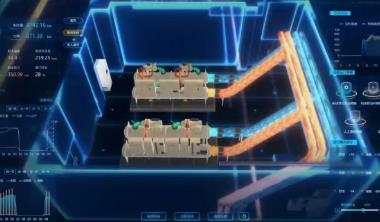
In terms of management efficiency, AI agents play multiple roles: as an answering assistant, with a 95% accuracy rate in solving professional problems, they convert engineers' experience into system instincts; as a management assistant, through the digital twin of the equipment's entire life cycle, they achieve a 50% increase in management efficiency; as a programming assistant, based on the ST language development and optimization, they shorten the secondary development cycle by 40%.